How to Set Up and Secure Your Trezor Wallet (Official)
⚠️ Important: Always make sure you are visiting the official site: https://trezor.io/start. Never download software or enter recovery information on imitation sites.
What Is Trezor.io/start?
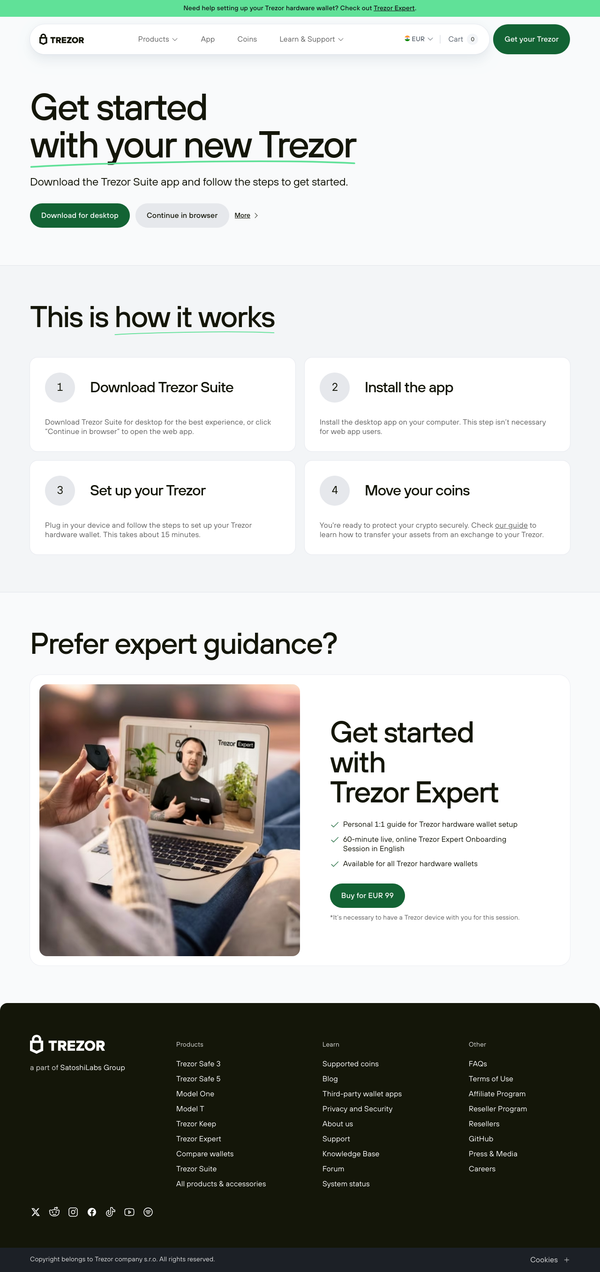
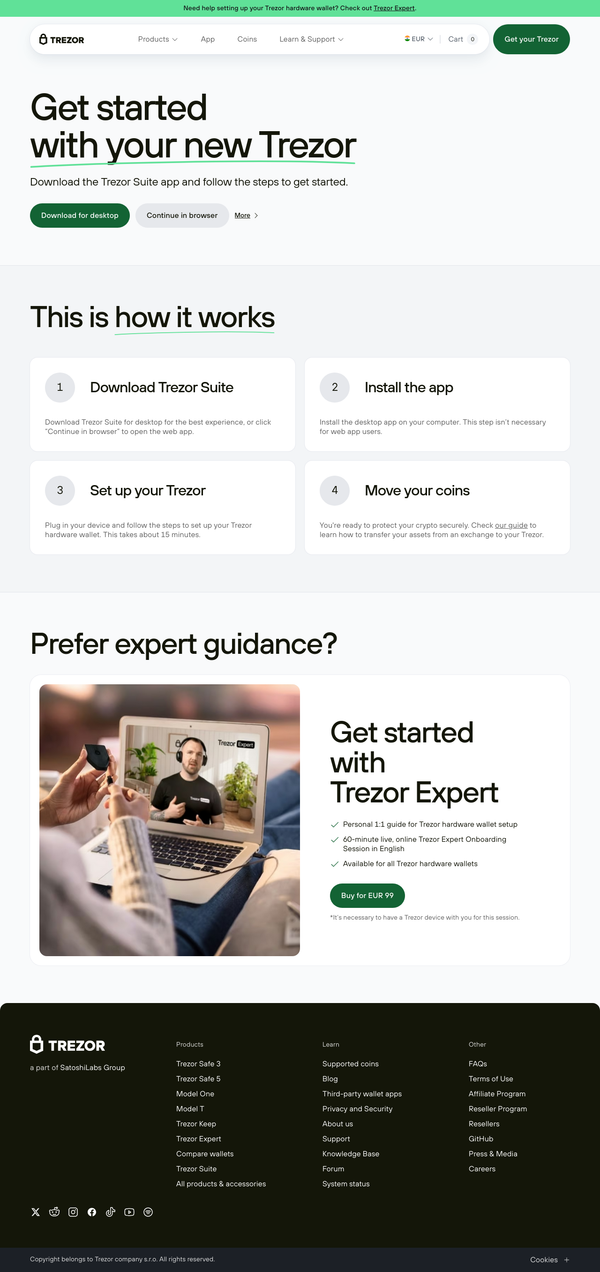
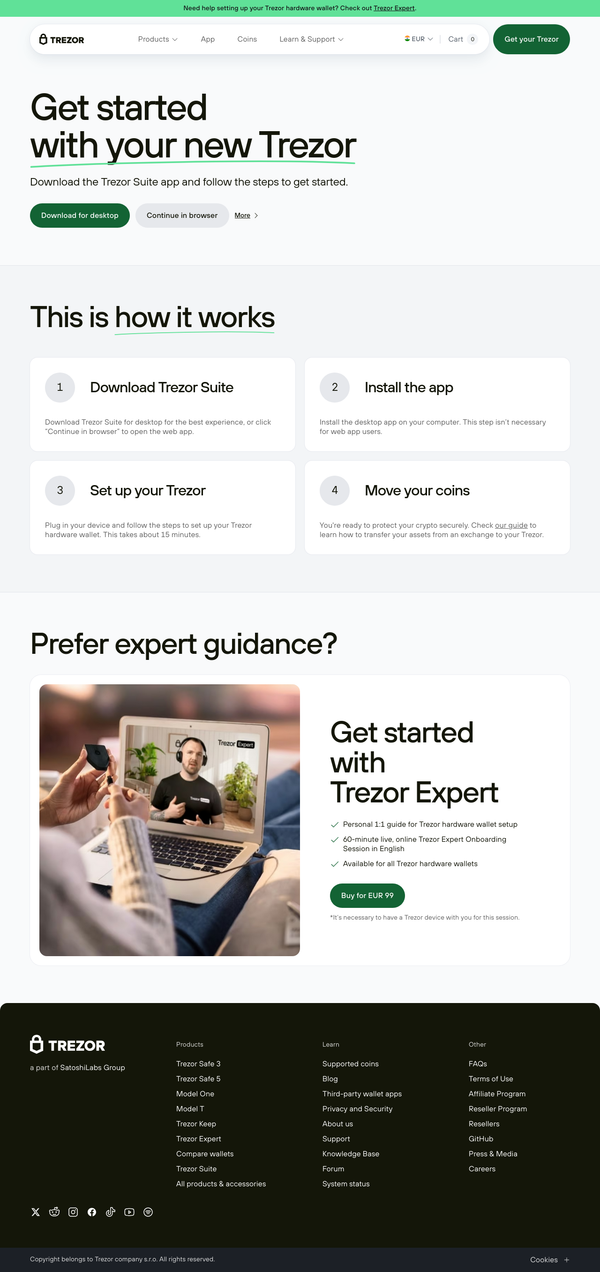
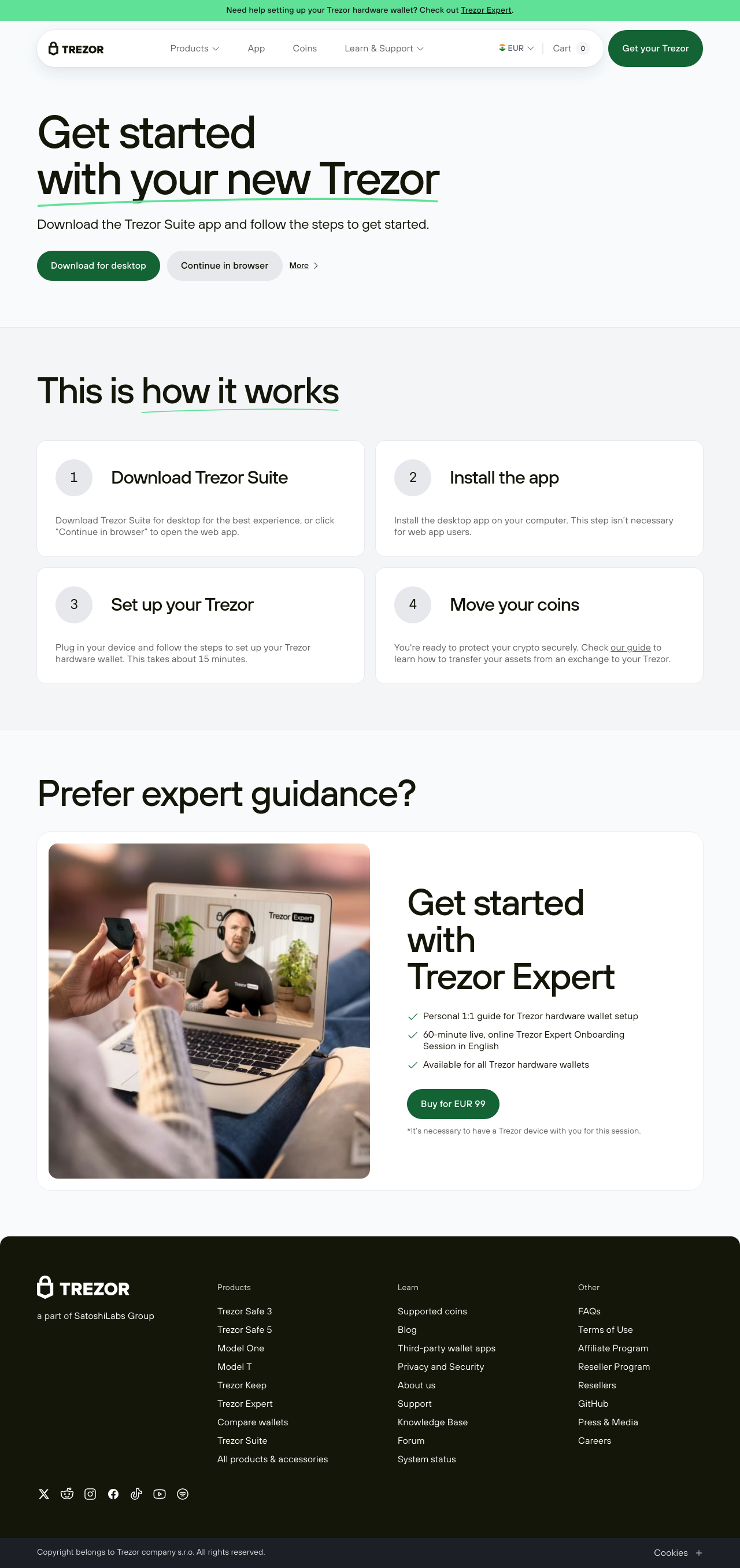
Trezor.io/start is the official starting point for setting up your Trezor hardware wallet. It provides:
- Step‑by‑step setup instructions
- Secure links to download the official Trezor Suite software
- Tips to verify your device’s authenticity
- Safety recommendations for seed phrase creation
This page is maintained by SatoshiLabs, the creator of Trezor.
🔗 Official start page: https://trezor.io/start
Why Use a Hardware Wallet Like Trezor?
A hardware wallet stores your private keys offline, which drastically reduces the risk of them being stolen by malware or hackers. Trezor wallets support many popular cryptocurrencies and give you full control over your funds.
Benefits include:
- Offline key storage
- Genuine device verification
- Backup and recovery options
- Support for Bitcoin, Ethereum, and hundreds of other assets
Official Trezor documentation explains how hardware wallets protect your keys at every step.
👉 Official docs: https://trezor.io/learn
What You’ll Need Before You Start
Before you navigate to Trezor.io/start, gather the following:
- Your Trezor device (Model One or Model T)
- A computer or mobile device with internet access
- A compatible USB cable (included with Trezor)
- A secure and private space to write down your recovery seed
Step‑by‑Step Setup at Trezor.io/start
Here’s what you can expect when you begin the setup process:
1. Visit the Official Site
Open a browser and go to:
You may be prompted to install or open Trezor Suite — the official wallet software for managing your coins. Always download from trezor.io or through the direct setup flow.
2. Connect Your Trezor Device
Plug your Trezor into your computer using the USB cable. The screen on the device should light up to show that it’s connected. If it doesn’t, check your USB cable and port.
3. Install the Latest Firmware
During setup, the Trezor Suite will detect if your device firmware is up to date. If not, you will be prompted to install the latest official firmware. This ensures maximum security.
✅ Always update firmware only through the official Trezor.io prompts.
4. Create a New Wallet
Once the firmware is installed:
- Choose Create a new wallet
- Follow the on‑screen instructions
- A 24‑word recovery seed will be generated
💡 Tip: Write down the recovery seed on the card provided (or similar secure paper). Do not save it digitally or take photographs — this increases risk of theft.
5. Confirm Your Recovery Seed
The device will ask you to confirm a few words from your recovery seed to ensure you recorded them correctly. This is a crucial step for wallet recovery.
6. Complete the Setup
After confirming your seed:
- Create any optional passphrase
- Open Trezor Suite
- Add the cryptocurrencies you want to manage
At this point, your wallet is ready to use.
Common Questions About Trezor.io/start
Is Trezor.io/start Safe?
Yes — the official Trezor.io/start page is safe only if you confirm you are on trezor.io. Always double‑check the URL and SSL lock icon in your browser.
Can I Set Up Trezor Without Internet?
You need an internet connection for firmware updates and downloading the Trezor Suite. However, your private keys remain offline on the device itself.
What Happens if I Lose My Trezor?
Your assets aren’t lost as long as you have your 24‑word recovery seed. You can restore your wallet on a new Trezor device or other compatible wallet using that seed.
Official Resources and Links
Here are the official trusted sites you should bookmark:
- 🛠️ Trezor.io/start – Official setup page: https://trezor.io/start
- 📦 Trezor Suite download – Through the setup flow on trezor.io
- 📚 Trezor Learn (help docs) – https://trezor.io/learn
- 🆘 Trezor Support – https://trezor.io/support
Safety Tips for Using Your Trezor
To keep your crypto secure:
- Always use the official Trezor.io/start page
- Never share your recovery seed with anyone
- Protect your seed offline
- Beware of phishing or fake sites
For additional security best practices, refer to the official Trezor security guidelines linked on the Trezor website.